How SignalOps uses MCP tools for agentic commerce recovery.
Model Context Protocol gives the SignalOps agent a typed way to inspect evidence, call internal tools, run approved connector actions, and return with proof instead of acting like a chat box.
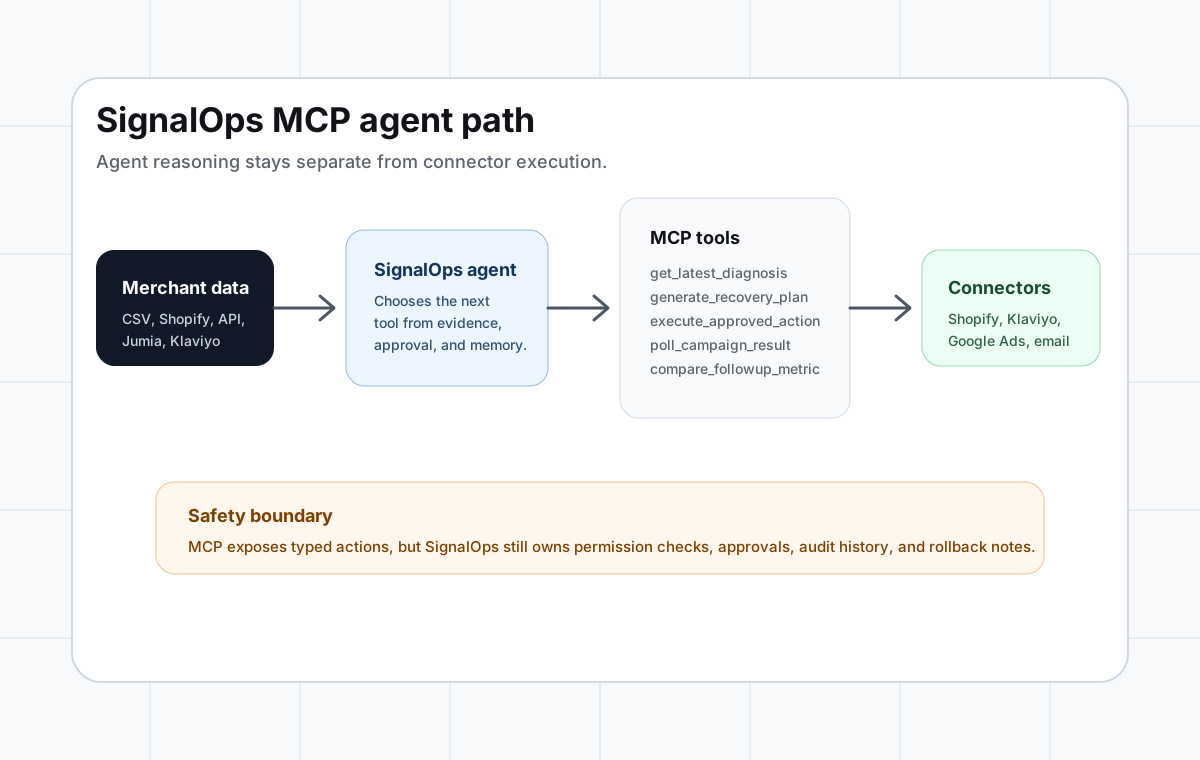
What MCP gives an agent
Model Context Protocol is a client-server protocol for connecting AI applications to external context and actions. In plain terms, it gives an agent a standard way to discover tools, read resources, use prompts, and exchange messages through a structured protocol instead of hard-coded one-off integrations.
That matters because a commerce recovery agent should not guess how to pause a campaign, draft an email, update a product, or compare a follow-up run. It should call an explicit tool with an input schema, receive structured output, and leave an audit trail.
The architecture shape
MCP uses a host, client, and server pattern. The host is the AI application. The client manages one protocol connection. The server exposes capabilities such as tools and resources. The data layer uses JSON-RPC messages, while the transport layer handles how those messages move between the client and server.
In SignalOps, the important mapping is simple:
| MCP concept | SignalOps mapping | Why it matters |
|---|---|---|
| Host | The agent runner or external AI host | Decides which tool should be used for the current recovery job. |
| Client | The protocol session created by the host | Lists tools, sends tool calls, and receives structured results. |
| Server | SignalOps MCP endpoint | Exposes commerce-safe tools backed by SignalOps services. |
| Tools | Executable recovery functions | Sync audiences, draft campaigns, prepare product edits, poll results, compare metrics. |
| Resources | Readable context | Latest diagnosis, queue state, product leak context, prior actions, evidence history. |
| Prompts | Reusable task patterns | Keep recovery plans and merchant reports consistent without turning them into static copy. |
Why not just call APIs directly?
Direct APIs are still necessary. Shopify, Klaviyo, Google Ads, Jumia, and email providers are reached through OAuth and platform APIs. MCP does not replace those connectors. It sits one layer above them so the agent sees a consistent set of tools regardless of which connector exists for the merchant.
That layer lets SignalOps handle missing connectors gracefully. If a merchant has Klaviyo but no Google Ads, the agent can still sync an audience and watch repeat purchase or refund movement. If Shopify is missing but the brand uses the ingestion API, the agent can still reason from normalized orders and product records.
The first SignalOps MCP tools
The first useful toolset is not a huge catalog. It is the smallest set that lets the agent move from evidence to action to proof.
What happens after a leak is found
A useful agent must remember what it did. If it creates a campaign, it should store the campaign ID. If it updates product copy, it should store what changed. If it saves a baseline refund rate, it should compare the next run against that exact baseline.
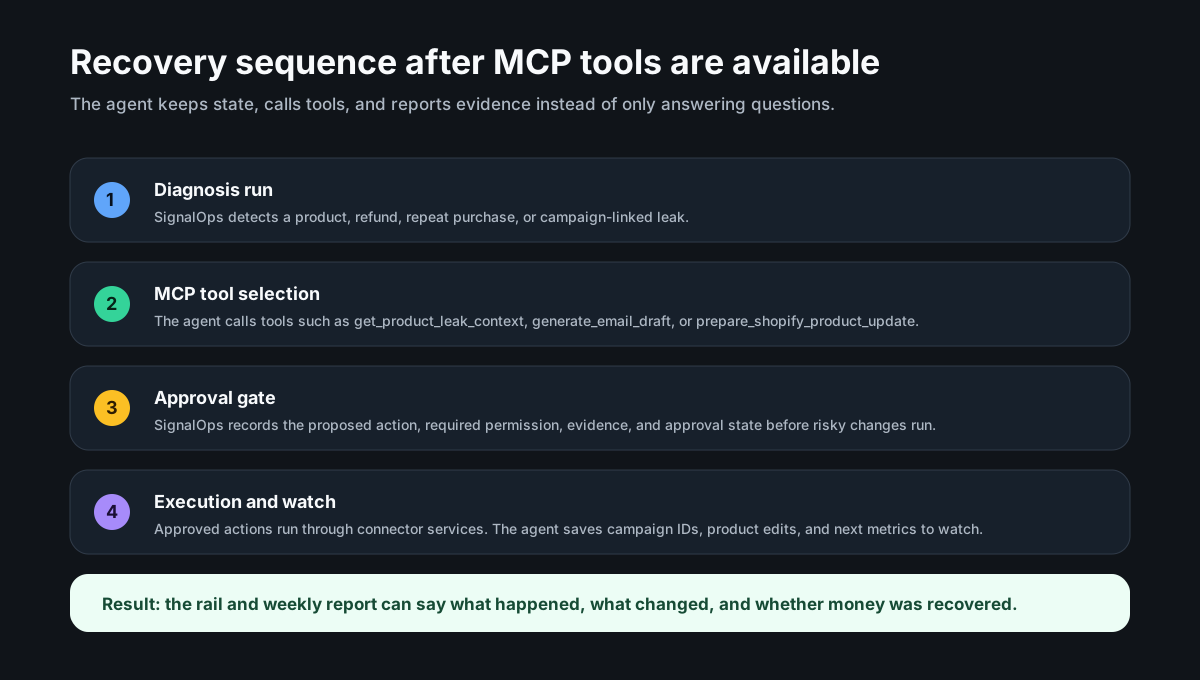
- SignalOps detects a leak and writes an action card.
- The agent runner asks MCP for active recovery jobs.
- The agent calls the right context and drafting tools.
- If approval is needed, SignalOps stores the proposed action and waits.
- Once approved, the execution tool calls the connector service.
- The agent stores external IDs, such as a Klaviyo campaign ID or Shopify product ID.
- A scheduled runner polls external results and compares the next diagnosis run.
- The rail and report summarize baseline, action, follow-up, and confidence.
Safety is not delegated to the model
The agent can propose work, but SignalOps enforces the work boundary. Risky actions require the right merchant plan, connector permission, stored approval, and a scoped execution payload. This prevents a generated plan from becoming an unchecked store change.
{
  "tool": "execute_approved_action",
  "input": {
    "recommendation_id": 79,
    "expected_connector": "klaviyo",
    "expected_action_type": "klaviyo_campaign_draft"
  },
  "guardrails": [
    "merchant owns recommendation",
    "approval_status is approved",
    "connector token exists",
    "payload has evidence and rollback note"
  ]
}
The agent receives the result, but the backend decides whether execution is allowed.
Why the dashboard rail matters
An agentic product should not hide work inside logs. The merchant needs a compact operator summary: what the agent found, what it did, what it is watching, and when proof will exist. That is why SignalOps saves an operator payload after each MCP-backed action.
{
  "status": "watching_followup",
  "headline": "Saved the baseline for this approved recovery action.",
  "latest_evidence": "Refund rate baseline: 31%. Klaviyo recovery flow executed.",
  "next_action": "When the next run arrives, compare refund rate automatically."
}
The UI can turn that into a short human report instead of showing raw internal fields.
The target behavior
The long-term target is an operator that earns trust by doing useful work in small, auditable steps:
- Find a leak.
- Quantify the money at risk.
- Propose the action with evidence.
- Request approval when the action changes a merchant system.
- Execute through the connector.
- Poll the external result.
- Compare the follow-up run.
- Report recovered value and confidence.